
Downloads · 30 days
10
2% of all-time downloads
bookbot/id-g2p-lstm
id-g2p-lstm is a machine learning model from bookbot. Use it for the machine learning task on the model card, and read the license before you ship it in a product. It is set up for tf-keras. The card lists the license as apache-2.0.
ID G2P LSTM is a grapheme-to-phoneme model based on the LSTM architecture. This model was trained from scratch on a modified Malay/Indonesian lexicon.
Downloads · 30 days
10
2% of all-time downloads
All-time downloads
520
Public
Repo size
22 MB
Likes
3
Public
Click a slice to open those files.
.data-00000-of-000012.4 MB · 55%
From the Hugging Face model README
ID G2P LSTM is a grapheme-to-phoneme model based on the LSTM architecture. This model was trained from scratch on a modified Malay/Indonesian lexicon.
This model was trained using the Keras framework. All training was done on Google Colaboratory. We adapted the LSTM training script provided by the official Keras Code Example.
| Model | #params | Arch. | Training/Validation data |
|---|---|---|---|
id-g2p-lstm | 596K | LSTM | Malay/Indonesian Lexicon |
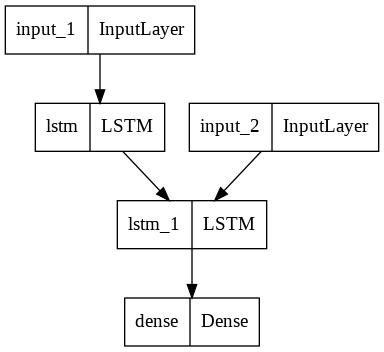
latent_dim: 256
num_encoder_tokens: 28
num_decoder_tokens: 32
max_encoder_seq_length: 24
max_decoder_seq_length: 25
batch_size: 64
optimizer: "rmsprop"
loss: "categorical_crossentropy"
learning_rate: 0.001
epochs: 100
g2id = {
    ' ': 27,
    "'": 0,
    '-': 1,
    'a': 2,
    'b': 3,
    'c': 4,
    'd': 5,
    'e': 6,
    'f': 7,
    'g': 8,
    'h': 9,
    'i': 10,
    'j': 11,
    'k': 12,
    'l': 13,
    'm': 14,
    'n': 15,
    'o': 16,
    'p': 17,
    'q': 18,
    'r': 19,
    's': 20,
    't': 21,
    'u': 22,
    'v': 23,
    'w': 24,
    'y': 25,
    'z': 26
}

p2id = {
    '\t': 0,
    '\n': 1,
    ' ': 31,
    '-': 2,
    'a': 3,
    'b': 4,
    'd': 5,
    'e': 6,
    'f': 7,
    'g': 8,
    'h': 9,
    'i': 10,
    'j': 11,
    'k': 12,
    'l': 13,
    'm': 14,
    'n': 15,
    'o': 16,
    'p': 17,
    'r': 18,
    's': 19,
    't': 20,
    'u': 21,
    'v': 22,
    'w': 23,
    'z': 24,
    'ŋ': 25,
    'ə': 26,
    'ɲ': 27,
    'ʃ': 28,
    'ʒ': 29,
    'ʔ': 30
}
import keras
import numpy as np
from huggingface_hub import from_pretrained_keras

latent_dim = 256
bos_token, eos_token, pad_token = "\t", "\n", " "
num_encoder_tokens, num_decoder_tokens = 28, 32
max_encoder_seq_length, max_decoder_seq_length = 24, 25

model = from_pretrained_keras("bookbot/id-g2p-lstm")

encoder_inputs = model.input[0]
encoder_outputs, state_h_enc, state_c_enc = model.layers[2].output
encoder_states = [state_h_enc, state_c_enc]
encoder_model = keras.Model(encoder_inputs, encoder_states)

decoder_inputs = model.input[1]

decoder_state_input_h = keras.Input(shape=(latent_dim,), name="input_3")
decoder_state_input_c = keras.Input(shape=(latent_dim,), name="input_4")
decoder_states_inputs = [decoder_state_input_h, decoder_state_input_c]
decoder_lstm = model.layers[3]
decoder_outputs, state_h_dec, state_c_dec = decoder_lstm(
    decoder_inputs, initial_state=decoder_states_inputs
)
decoder_states = [state_h_dec, state_c_dec]
decoder_dense = model.layers[4]
decoder_outputs = decoder_dense(decoder_outputs)
decoder_model = keras.Model(
    [decoder_inputs] + decoder_states_inputs, [decoder_outputs] + decoder_states
)

def inference(sequence):
    id2p = {v: k for k, v in p2id.items()}

    input_seq = np.zeros(
        (1, max_encoder_seq_length, num_encoder_tokens), dtype="float32"
    )

    for t, char in enumerate(sequence):
        input_seq[0, t, g2id[char]] = 1.0
    input_seq[0, t + 1 :, g2id[pad_token]] = 1.0

    states_value = encoder_model.predict(input_seq)

    target_seq = np.zeros((1, 1, num_decoder_tokens))
    target_seq[0, 0, p2id[bos_token]] = 1.0

    stop_condition = False
    decoded_sentence = ""
    while not stop_condition:
        output_tokens, h, c = decoder_model.predict([target_seq] + states_value)

        sampled_token_index = np.argmax(output_tokens[0, -1, :])
        sampled_char = id2p[sampled_token_index]
        decoded_sentence += sampled_char

        if sampled_char == eos_token or len(decoded_sentence) > max_decoder_seq_length:
            stop_condition = True

        target_seq = np.zeros((1, 1, num_decoder_tokens))
        target_seq[0, 0, sampled_token_index] = 1.0

        states_value = [h, c]
    return decoded_sentence.replace(eos_token, "")

inference("mengembangkannya")
ID G2P LSTM was trained and evaluated by Ananto Joyoadikusumo, Steven Limcorn, Wilson Wongso. All computation and development are done on Google Colaboratory.