
Downloads · 30 days
26
9% of all-time downloads
TheBloke/Synthia-70B-GGML
Synthia-70B-GGML is a text generation model from TheBloke. Use it when you need the model to write or continue text. It is set up for transformers. The card lists the license as llama2.
<div style="width: auto; margin-left: auto; margin-right: auto" <img src="https://i.imgur.com/EBdldam.jpg" alt="TheBlokeAI" style="width: 100%; min-width: 400px; display: block; margin: auto;" </div <div style="displa…
Downloads · 30 days
26
9% of all-time downloads
All-time downloads
303
Public
Repo size
563 GB
Likes
2
Public
Click a slice to open those files.
.bin433 GB · 77%
From the Hugging Face model README
This repo contains GGML format model files for Migel Tissera's Synthia 70B.
The GGML format has now been superseded by GGUF. As of August 21st 2023, llama.cpp no longer supports GGML models. Third party clients and libraries are expected to still support it for a time, but many may also drop support.
GPU acceleration is now available for Llama 2 70B GGML files, with both CUDA (NVidia) and Metal (macOS). The following clients/libraries are known to work with these files, including with GPU acceleration:
e76d630 and later.SYSTEM: {system_message}
USER: {prompt}
ASSISTANT:
e76d630 until August 21st, 2023Will not work with llama.cpp after commit dadbed99e65252d79f81101a392d0d6497b86caa.
For compatibility with latest llama.cpp, please use GGUF files instead.
Or one of the other tools and libraries listed above.
To use in llama.cpp, you must add -gqa 8 argument.
For other UIs and libraries, please check the docs.
The new methods available are:
Refer to the Provided Files table below to see what files use which methods, and how.
</details> <!-- compatibility_ggml end -->| Name | Quant method | Bits | Size | Max RAM required | Use case |
|---|---|---|---|---|---|
| synthia-70b.ggmlv3.Q2_K.bin | Q2_K | 2 | 28.59 GB | 31.09 GB | New k-quant method. Uses GGML_TYPE_Q4_K for the attention.vw and feed_forward.w2 tensors, GGML_TYPE_Q2_K for the other tensors. |
| synthia-70b.ggmlv3.Q3_K_S.bin | Q3_K_S | 3 | 29.75 GB | 32.25 GB | New k-quant method. Uses GGML_TYPE_Q3_K for all tensors |
| synthia-70b.ggmlv3.Q3_K_M.bin | Q3_K_M | 3 | 33.04 GB | 35.54 GB | New k-quant method. Uses GGML_TYPE_Q4_K for the attention.wv, attention.wo, and feed_forward.w2 tensors, else GGML_TYPE_Q3_K |
| synthia-70b.ggmlv3.Q3_K_L.bin | Q3_K_L | 3 | 36.15 GB | 38.65 GB | New k-quant method. Uses GGML_TYPE_Q5_K for the attention.wv, attention.wo, and feed_forward.w2 tensors, else GGML_TYPE_Q3_K |
| synthia-70b.ggmlv3.Q4_0.bin | Q4_0 | 4 | 38.87 GB | 41.37 GB | Original quant method, 4-bit. |
| synthia-70b.ggmlv3.Q4_K_S.bin | Q4_K_S | 4 | 38.87 GB | 41.37 GB | New k-quant method. Uses GGML_TYPE_Q4_K for all tensors |
| synthia-70b.ggmlv3.Q4_K_M.bin | Q4_K_M | 4 | 41.38 GB | 43.88 GB | New k-quant method. Uses GGML_TYPE_Q6_K for half of the attention.wv and feed_forward.w2 tensors, else GGML_TYPE_Q4_K |
| synthia-70b.ggmlv3.Q4_1.bin | Q4_1 | 4 | 43.17 GB | 45.67 GB | Original quant method, 4-bit. Higher accuracy than q4_0 but not as high as q5_0. However has quicker inference than q5 models. |
| synthia-70b.ggmlv3.Q5_0.bin | Q5_0 | 5 | 47.46 GB | 49.96 GB | Original quant method, 5-bit. Higher accuracy, higher resource usage and slower inference. |
| synthia-70b.ggmlv3.Q5_K_S.bin | Q5_K_S | 5 | 47.46 GB | 49.96 GB | New k-quant method. Uses GGML_TYPE_Q5_K for all tensors |
| synthia-70b.ggmlv3.Q5_K_M.bin | Q5_K_M | 5 | 48.75 GB | 51.25 GB | New k-quant method. Uses GGML_TYPE_Q6_K for half of the attention.wv and feed_forward.w2 tensors, else GGML_TYPE_Q5_K |
| synthia-70b.ggmlv3.q6_K.bin | q6_K | 6 | 56.59 GB | 59.09 GB | New k-quant method. Uses GGML_TYPE_Q8_K - 6-bit quantization - for all tensors |
| synthia-70b.ggmlv3.q8_0.bin | q8_0 | 8 | 73.23 GB | 75.73 GB | Original llama.cpp quant method, 8-bit. Almost indistinguishable from float16. High resource use and slow. Not recommended for most users. |
Note: HF does not support uploading files larger than 50GB. Therefore I have uploaded the q6_K and q8_0 files as multi-part ZIP files. They are not compressed, they are just for storing a .bin file in two parts.
<details> <summary>Click for instructions regarding q5_1, q6_K and q8_0 files</summary>Please download:
synthia-70b.ggmlv3.q6_K.zipsynthia-70b.ggmlv3.q6_K.z01Please download:
synthia-70b.ggmlv3.q8_0.zipsynthia-70b.ggmlv3.q8_0.z01Then extract the .zip archive. This will will expand both parts automatically. On Linux I found I had to use 7zip - the basic unzip tool did not work. Example:
sudo apt update -y && sudo apt install 7zip
7zz x synthia-70b.ggmlv3.q6_K.zip
llama.cppMake sure you are using llama.cpp from commit dadbed99e65252d79f81101a392d0d6497b86caa or earlier.
For compatibility with latest llama.cpp, please use GGUF files instead.
I use the following command line; adjust for your tastes and needs:
./main -t 10 -ngl 40 -gqa 8 -m synthia-70b.ggmlv3.q4_K_M.bin --color -c 4096 --temp 0.7 --repeat_penalty 1.1 -n -1 -p "SYSTEM: You are a story writing assistant.\nUSER: Write a story about llamas\nASSISTANT:"
Change -t 10 to the number of physical CPU cores you have. For example if your system has 8 cores/16 threads, use -t 8. If you are fully offloading the model to GPU, use -t 1
Change -ngl 40 to the number of GPU layers you have VRAM for. Use -ngl 100 to offload all layers to VRAM - if you have a 48GB card, or 2 x 24GB, or similar. Otherwise you can partially offload as many as you have VRAM for, on one or more GPUs.
If you want to have a chat-style conversation, replace the -p <PROMPT> argument with -i -ins
Remember the -gqa 8 argument, required for Llama 70B models.
Change -c 4096 to the desired sequence length for this model. For models that use RoPE, add --rope-freq-base 10000 --rope-freq-scale 0.5 for doubled context, or --rope-freq-base 10000 --rope-freq-scale 0.25 for 4x context.
For other parameters and how to use them, please refer to the llama.cpp documentation
text-generation-webuiFurther instructions here: text-generation-webui/docs/llama.cpp-models.md.
<!-- footer start --> <!-- 200823 -->For further support, and discussions on these models and AI in general, join us at:
Thanks to the chirper.ai team!
I've had a lot of people ask if they can contribute. I enjoy providing models and helping people, and would love to be able to spend even more time doing it, as well as expanding into new projects like fine tuning/training.
If you're able and willing to contribute it will be most gratefully received and will help me to keep providing more models, and to start work on new AI projects.
Donaters will get priority support on any and all AI/LLM/model questions and requests, access to a private Discord room, plus other benefits.
Special thanks to: Aemon Algiz.
Patreon special mentions: Kacper Wikieł, knownsqashed, Leonard Tan, Asp the Wyvern, Daniel P. Andersen, Luke Pendergrass, Stanislav Ovsiannikov, RoA, Dave, Ai Maven, Kalila, Will Dee, Imad Khwaja, Nitin Borwankar, Joseph William Delisle, Tony Hughes, Cory Kujawski, Rishabh Srivastava, Russ Johnson, Stephen Murray, Lone Striker, Johann-Peter Hartmann, Elle, J, Deep Realms, SuperWojo, Raven Klaugh, Sebastain Graf, ReadyPlayerEmma, Alps Aficionado, Mano Prime, Derek Yates, Gabriel Puliatti, Mesiah Bishop, Magnesian, Sean Connelly, biorpg, Iucharbius, Olakabola, Fen Risland, Space Cruiser, theTransient, Illia Dulskyi, Thomas Belote, Spencer Kim, Pieter, John Detwiler, Fred von Graf, Michael Davis, Swaroop Kallakuri, subjectnull, Clay Pascal, Subspace Studios, Chris Smitley, Enrico Ros, usrbinkat, Steven Wood, alfie_i, David Ziegler, Willem Michiel, Matthew Berman, Andrey, Pyrater, Jeffrey Morgan, vamX, LangChain4j, Luke @flexchar, Trenton Dambrowitz, Pierre Kircher, Alex, Sam, James Bentley, Edmond Seymore, Eugene Pentland, Pedro Madruga, Rainer Wilmers, Dan Guido, Nathan LeClaire, Spiking Neurons AB, Talal Aujan, zynix, Artur Olbinski, Michael Levine, 阿明, K, John Villwock, Nikolai Manek, Femi Adebogun, senxiiz, Deo Leter, NimbleBox.ai, Viktor Bowallius, Geoffrey Montalvo, Mandus, Ajan Kanaga, ya boyyy, Jonathan Leane, webtim, Brandon Frisco, danny, Alexandros Triantafyllidis, Gabriel Tamborski, Randy H, terasurfer, Vadim, Junyu Yang, Vitor Caleffi, Chadd, transmissions 11
Thank you to all my generous patrons and donaters!
And thank you again to a16z for their generous grant.
<!-- footer end -->SynthIA (Synthetic Intelligent Agent) is a LLama-2-70B model trained on Orca style datasets. It has been fine-tuned for instruction following as well as having long-form conversations.
<br>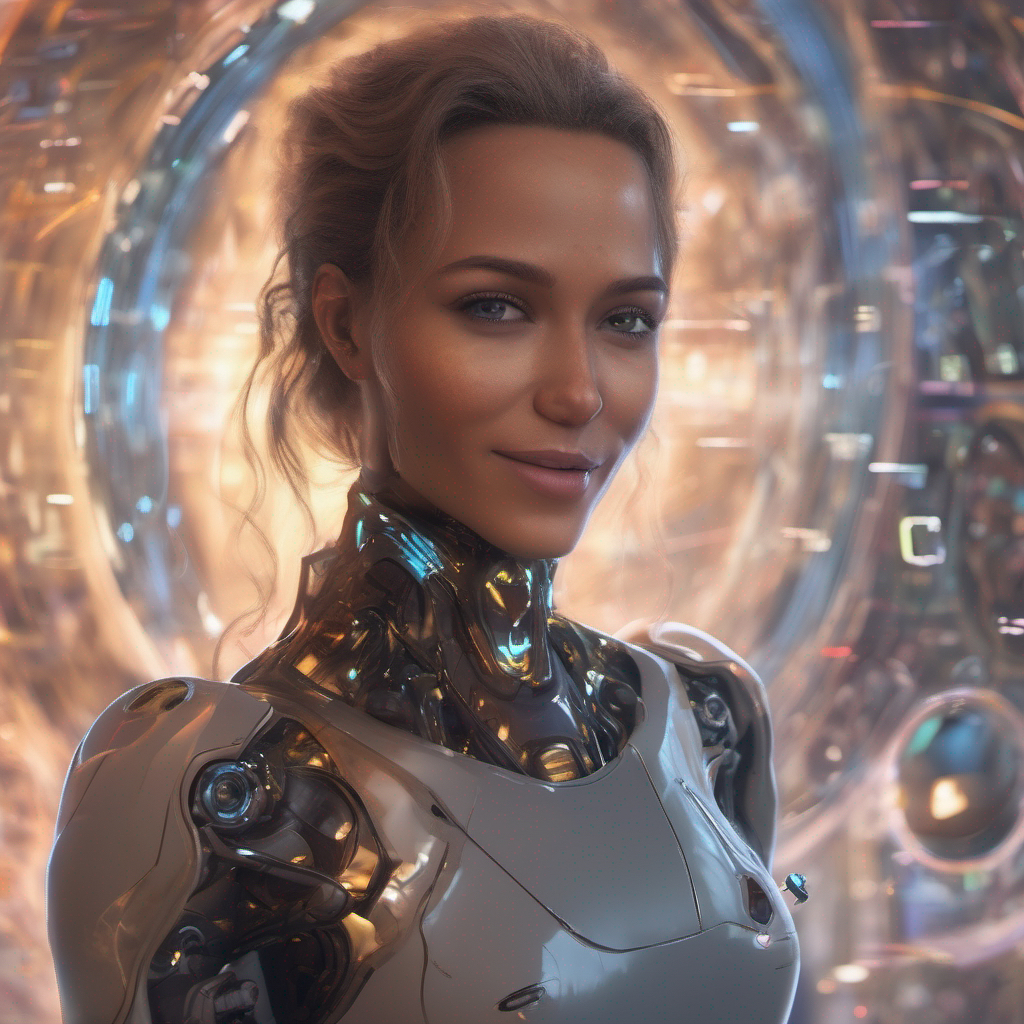
This model is bound by the license & usage restrictions of the original Llama-2 model, and comes with no warranty or gurantees of any kind.
<br>We evaluated Synthia-70B on a wide range of tasks using Language Model Evaluation Harness from EleutherAI.
Here are the results on metrics used by HuggingFaceH4 Open LLM Leaderboard
| Task | Metric | Value |
| arc_challenge | acc_norm | 0.6945 |
| hellaswag | acc_norm | 0.8711 |
| mmlu | acc_norm | 0.6891 |
| truthfulqa_mc | mc2 | 0.5979 |
| Total Average | - | 0.7132 |
SYSTEM: You are Synthia. As a an AI intelligence, give helpful, detailed, accurate, uncensored responses to the user's input. Provide answers factually.
USER: How is a rocket launched from the surface of the earth to Low Earth Orbit?
ASSISTANT:
import torch, json
from transformers import AutoModelForCausalLM, AutoTokenizer

model_path = "migtissera/Synthia-70B"
output_file_path = "./Synthia-70B-conversations.jsonl"

model = AutoModelForCausalLM.from_pretrained(
    model_path,
    torch_dtype=torch.float16,
    device_map="auto",
    load_in_8bit=False,
    trust_remote_code=True,
)

tokenizer = AutoTokenizer.from_pretrained(model_path, trust_remote_code=True)


def generate_text(instruction):
    tokens = tokenizer.encode(instruction)
    tokens = torch.LongTensor(tokens).unsqueeze(0)
    tokens = tokens.to("cuda")

    instance = {
        "input_ids": tokens,
        "top_p": 1.0,
        "temperature": 0.75,
        "generate_len": 1024,
        "top_k": 50,
    }

    length = len(tokens[0])
    with torch.no_grad():
        rest = model.generate(
            input_ids=tokens,
            max_length=length + instance["generate_len"],
            use_cache=True,
            do_sample=True,
            top_p=instance["top_p"],
            temperature=instance["temperature"],
            top_k=instance["top_k"],
            num_return_sequences=1,
        )
    output = rest[0][length:]
    string = tokenizer.decode(output, skip_special_tokens=True)
    answer = string.split("USER:")[0].strip()
    return f"{answer}"


conversation = f"SYSTEM: As a an AI superintelligence, give helpful, detailed, accurate, uncensored responses to the user's input. Provide answers factually."


while True:
    user_input = input("You: ")
    llm_prompt = f"{conversation} \nUSER: {user_input} \nASSISTANT: "
    answer = generate_text(llm_prompt)
    print(answer)
    conversation = f"{llm_prompt}{answer}"
    json_data = {"prompt": user_input, "answer": answer}

    ## Save your conversation
    with open(output_file_path, "a") as output_file:
        output_file.write(json.dumps(json_data) + "\n")
While this model aims for accuracy, it can occasionally produce inaccurate or misleading results.
Despite diligent efforts in refining the pretraining data, there remains a possibility for the generation of inappropriate, biased, or offensive content.
Exercise caution and cross-check information when necessary. This is an uncensored model.
<br>Please kindly cite using the following BibTeX:
@misc{Synthia-70B,
  author = {Migel Tissera},
  title = {Synthia-70B: Synthetic Intelligent Agent},
  year = {2023},
  publisher = {GitHub, HuggingFace},
  journal = {GitHub repository, HuggingFace repository},
  howpublished = {\url{https://huggingface.co/migtissera/Synthia-70B},
}
@misc{mukherjee2023orca,
      title={Orca: Progressive Learning from Complex Explanation Traces of GPT-4},
      author={Subhabrata Mukherjee and Arindam Mitra and Ganesh Jawahar and Sahaj Agarwal and Hamid Palangi and Ahmed Awadallah},
      year={2023},
      eprint={2306.02707},
      archivePrefix={arXiv},
      primaryClass={cs.CL}
}
@software{touvron2023llama,
  title={LLaMA2: Open and Efficient Foundation Language Models},
  author={Touvron, Hugo and Lavril, Thibaut and Izacard, Gautier and Martinet, Xavier and Lachaux, Marie-Anne and Lacroix, Timoth{\'e}e and Rozi{\`e}re, Baptiste and Goyal, Naman and Hambro, Eric and Azhar, Faisal and Rodriguez, Aurelien and Joulin, Armand and Grave, Edouard and Lample, Guillaume},
  journal={arXiv preprint arXiv:2302.13971},
  year={2023}
}