
Downloads · 30 days
2.8K
5% of all-time downloads
TeichAI/gemma-4-26B-A4B-it-Claude-Opus-Distill-GGUF
gemma-4-26B-A4B-it-Claude-Opus-Distill-GGUF is a machine learning model from TeichAI. Use it for the machine learning task on the model card, and read the license before you ship it in a product. The card lists the license as apache-2.0.
Build Environment & Features: - Fine-tuning Framework: Unsloth - Reasoning Effort: High - This model bridges the gap between Google's exceptional open-weights architecture and Claude 4.6's profound reasoning capabilit…
Downloads · 30 days
2.8K
5% of all-time downloads
All-time downloads
60K
Public
Repo size
181 GB
Likes
42
Public
Click a slice to open those files.
.gguf181 GB · 100%
From the Hugging Face model README
Build Environment & Features:
- Fine-tuning Framework: Unsloth
- Reasoning Effort: High
- This model bridges the gap between Google's exceptional open-weights architecture and Claude 4.6's profound reasoning capabilities, leveraging cutting-edge fine-tuning environments.
- Upgrade Alert: A significantly enhanced version of this distillation has been released. We highly recommend switching to v2 for a superior reasoning experience and improved stability.
- Model Link: gemma-4-26B-A4B-it-Claude-Opus-Distill-v2-GGUF
We have implemented critical upgrades to further refine the model's performance:
Gemma 4 - 26B A4B x Claude Opus 4.6 is a highly capable model fine-tuned on top of the powerful Gemma 4 architecture. The model's core directive is to absorb state-of-the-art reasoning distillation, primarily sourced from Claude-4.6 Opus interactions.
By utilizing datasets where the reasoning effort was explicitly set to High, this model excels in breaking down complex problems and delivering precise, nuanced solutions across a variety of demanding domains.
Base Model (unsloth/gemma-4-26B-A4B-it)
 │
 ▼
Supervised Fine-Tuning (SFT) + High-Effort Reasoning Datasets
 │
 ▼
Final Model (Gemma 4 - 26B A4B x Claude Opus 4.6)
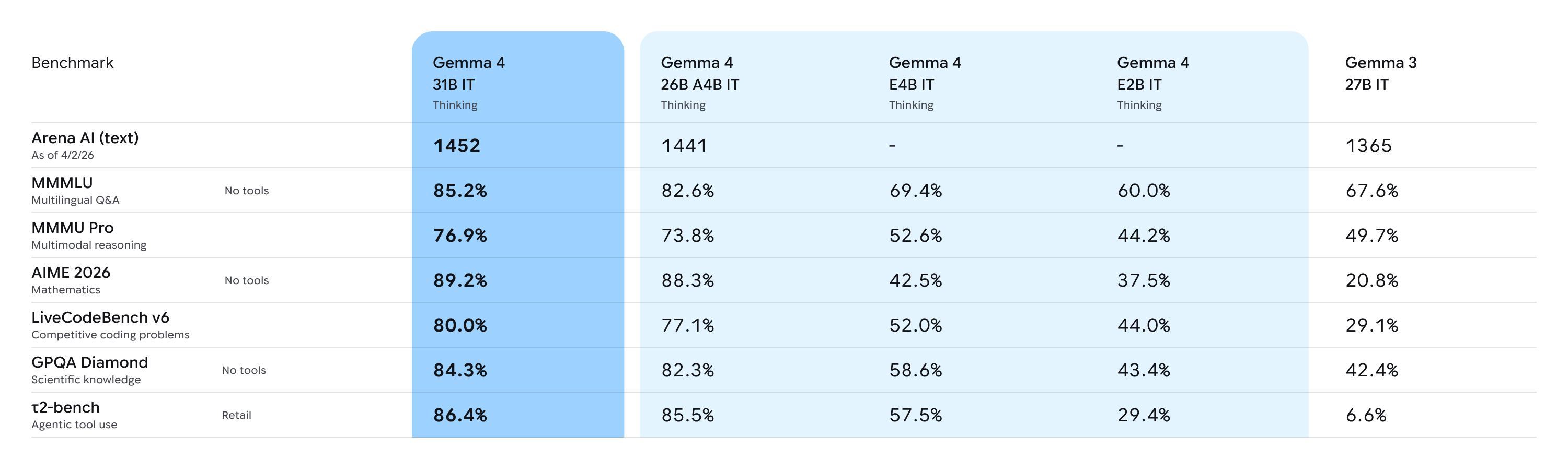
Performance vs Size:
Deep Dive Analysis: For more comprehensive insights regarding the base capabilities of the Gemma 4 architecture, please refer to this Analysis Document.
The dataset consists of high-quality, high-effort reasoning distillation data:
| Dataset Name | Description / Purpose |
|---|---|
TeichAI/Claude-Opus-4.6-Reasoning-887x | Core Claude 4.6 Opus reasoning trajectories. |
TeichAI/Claude-Sonnet-4.6-Reasoning-1100x | Additional high-density reasoning instances from Claude 4.6 Sonnet. |
TeichAI/claude-4.5-opus-high-reasoning-250x | Legacy high-intensity reasoning distillation. |
TeichAI/Claude-Opus-4.6-Reasoning-500x | Additional Opus 4.6 reasoning traces targeting domain diversity |
Crownelius/Opus-4.6-Reasoning-2100x-formatted | Crownelius's extensively formatted Opus reasoning dataset for structural reinforcement. |
Thanks to its robust base model and high-effort reasoning distillation, this model is highly optimized for the following use cases:
For the best performance, use these configurations and best practices:
Use the following standardized sampling configuration across all use cases:
temperature=1.0top_p=0.95top_k=64Compared to Gemma 3, the models use standard system, assistant, and user roles. To properly manage the thinking process, use the following control tokens:
<|think|> token at the start of the system prompt. To disable thinking, remove the token.<|channel>thought\n[Internal reasoning]<channel|><|channel>thought\n<channel|>[Final answer][!Note] Note that many libraries like Transformers and llama.cpp handle the complexities of the chat template for you.
Aside from variable aspect ratios, Gemma 4 supports variable image resolution through a configurable visual token budget, which controls how many tokens are used to represent an image. A higher token budget preserves more visual detail at the cost of additional compute, while a lower budget enables faster inference for tasks that don't require fine-grained understanding.
Use the following prompt structures for audio processing:
Transcribe the following speech segment in {LANGUAGE} into {LANGUAGE} text.

Follow these specific instructions for formatting the answer:
* Only output the transcription, with no newlines.
* When transcribing numbers, write the digits, i.e. write 1.7 and not one point seven, and write 3 instead of three.
Transcribe the following speech segment in {SOURCE_LANGUAGE}, then translate it into {TARGET_LANGUAGE}.
When formatting the answer, first output the transcription in {SOURCE_LANGUAGE}, then one newline, then output the string '{TARGET_LANGUAGE}: ', then the translation in {TARGET_LANGUAGE}.
All models support image inputs and can process videos as frames whereas the E2B and E4B models also support audio inputs. Audio supports a maximum length of 30 seconds. Video supports a maximum of 60 seconds assuming the images are processed at one frame per second.
If you use this model in your research or projects, please cite:
@misc{teichai_gemma4_26b_a4b_opus_distilled,
  title        = {Gemma-4-26B-A4B-it-Claude-Opus-Distill},
  author       = {TeichAI},
  year         = {2026},
  publisher    = {Hugging Face},
  howpublished = {\url{https://huggingface.co/TeichAI/gemma-4-26B-A4B-it-Claude-Opus-Distill}}
}