
Downloads · 30 days
19
8% of all-time downloads
AmadFR/ecovision_mobilenetv3
ecovision_mobilenetv3 is a image classification model from AmadFR. Use it when you need a label for an image. The card lists the license as mit.
This model is a fine-tuned MobileNetV3 Large model for garbage classification. It has been trained on the Garbage Classification V2 and Garbage Classification datasets and achieves an overall accuracy of around 95% on…
Downloads · 30 days
19
8% of all-time downloads
All-time downloads
229
Public
Repo size
34.1 MB
Likes
0
Public
Click a slice to open those files.
.pth17.1 MB · 45%
From the Hugging Face model README
This model is a fine-tuned MobileNetV3 Large model for garbage classification. It has been trained on the Garbage Classification V2 and Garbage Classification datasets and achieves an overall accuracy of around 95% on the test set.
This model is based on the MobileNetV3 Large architecture and has been fine-tuned for garbage classification. It takes an image as input and outputs the predicted class label.
The model was trained using PyTorch and the following hyperparameters:
This model is intended to be used for classifying garbage into different categories. It can be used for a variety of applications, such as waste sorting and recycling.
However, it is important to note that the model is limited to the classes it was trained on. It may not be able to accurately classify images of garbage that are not in those classes. Additionally, the model's accuracy may vary depending on the quality of the input images.
The following steps were followed to train the model:
The following table summarizes the training process:
| Epoch | Train Loss | Train Accuracy | Val Loss | Val Accuracy |
|---|---|---|---|---|
| 1 | 0.5056 | 83.59% | 0.3849 | 87.71% |
| 2 | 0.3289 | 89.43% | 0.3087 | 90.47% |
| 3 | 0.2692 | 91.24% | 0.3045 | 90.27% |
| 4 | 0.1377 | 95.39% | 0.1322 | 95.55% |
| 5 | 0.0860 | 97.03% | 0.1148 | 96.03% |
| 6 | 0.0677 | 97.72% | 0.1184 | 96.16% |
| 7 | 0.0540 | 98.03% | 0.1150 | 96.39% |
| 8 | 0.0505 | 98.34% | 0.1122 | 96.49% |
| 9 | 0.0470 | 98.41% | 0.1112 | 96.44% |
| 10 | 0.0507 | 98.30% | 0.1110 | 96.46% |
The model was trained using the sumn2u/garbage-classification-v2 dataset and evaluated on the mostafaabla/garbage-classification dataset. These datasets collectively contain approximately 19,762 images of garbage classified into ten categories:
| Class | Accuracy |
|---|---|
| battery | 99.36% |
| biological | 98.27% |
| cardboard | 97.64% |
| clothes | 99,34% |
| glass | 98,01% |
| metal | 96,87% |
| paper | 96,38% |
| plastic | 91,79% |
| shoes | 99,54% |
| trash | 98,99% |
You can explore and interact with the EcoVision MobileNetV3 model directly on Hugging Face Spaces where it is hosted via an intuitive Gradio interface.
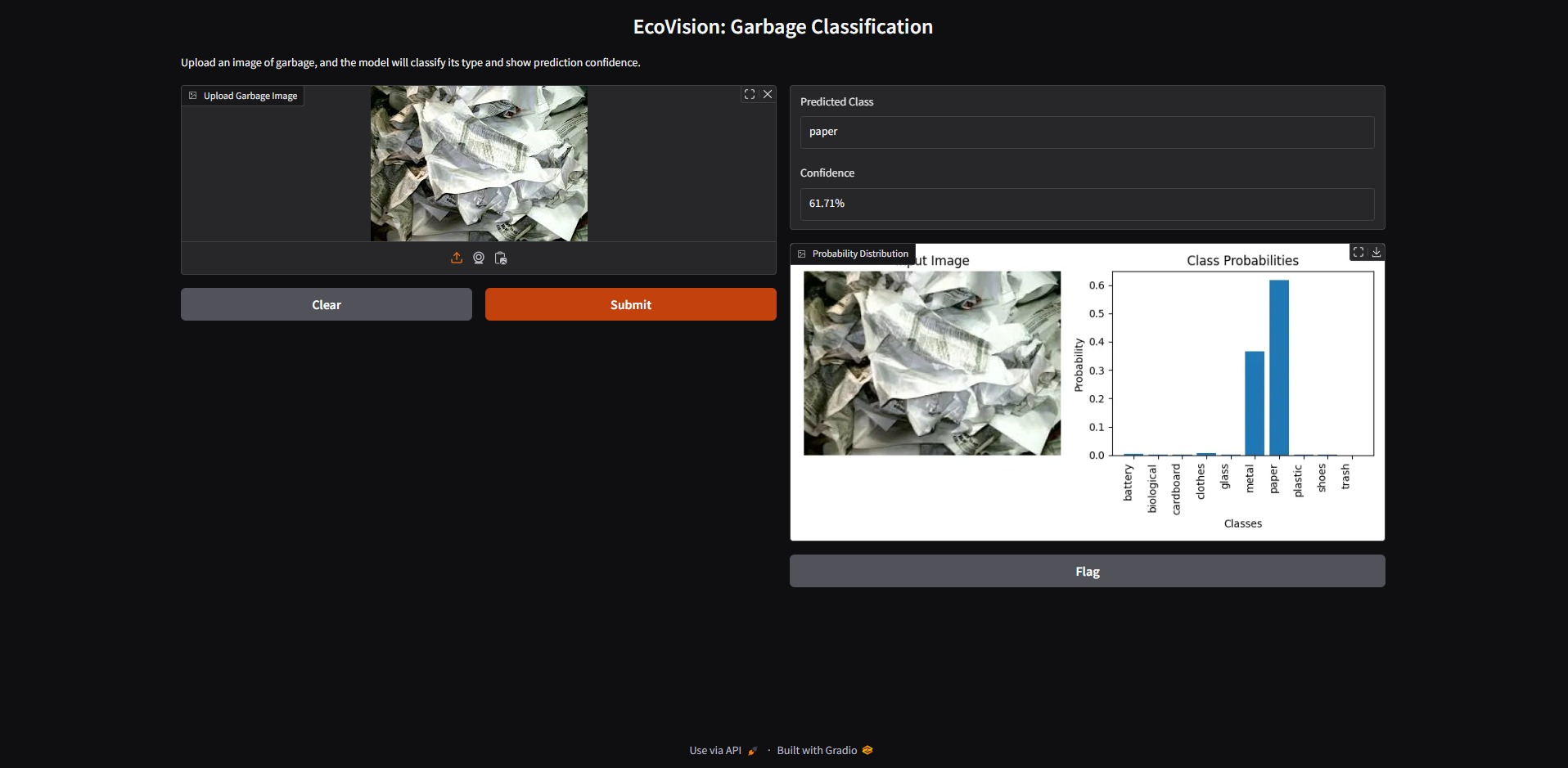
The Ecovision MobileNetV3 model demonstrated strong performance in classifying garbage, achieving an overall accuracy of approximately 95% on the test dataset. Detailed performance metrics are outlined below:
Overall Performance
Per-Class Performance The table below summarizes the model's performance for each class, showing the number of correct and incorrect predictions:
| Class | Correct Predictions | Incorrect Predictions | Example Highest | Example Lowest |
|---|---|---|---|---|
| Battery | 939 | 6 | 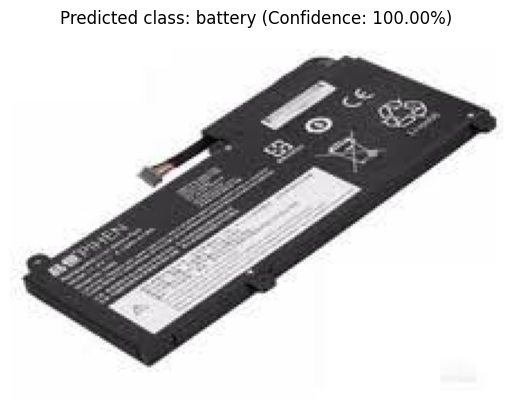 | 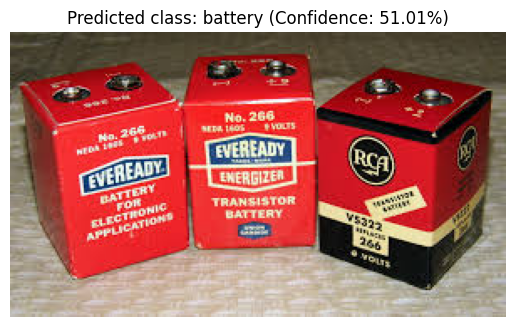 |
| Biological | 968 | 17 | 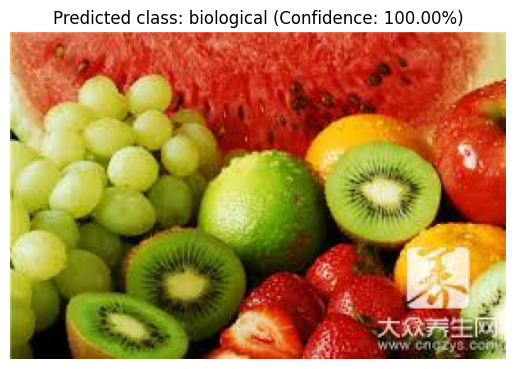 | 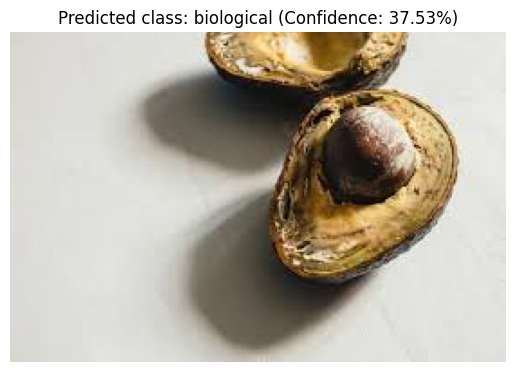 |
| Cardboard | 870 | 21 |  | 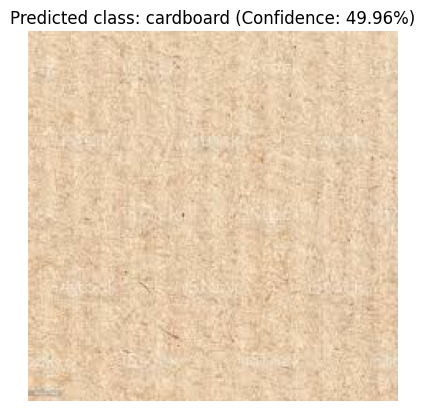 |
| Clothes | 5,290 | 35 | 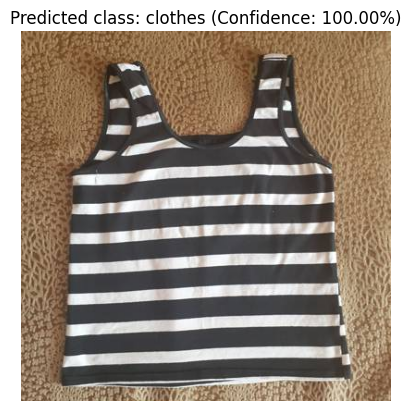 | 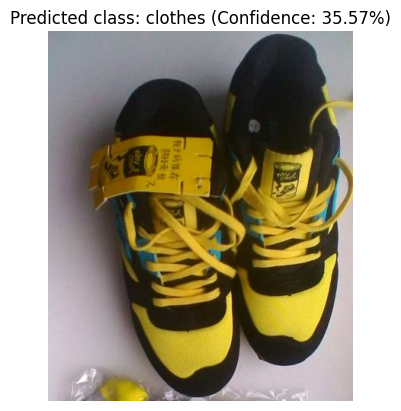 |
| Glass | 1,971 | 40 | 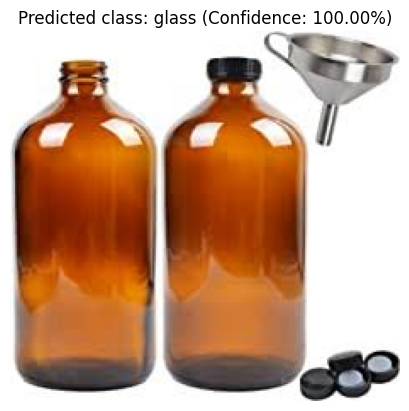 | 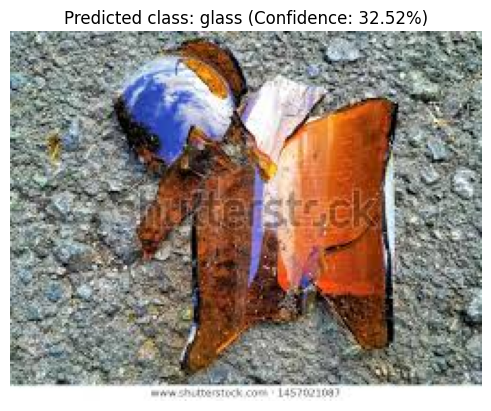 |
| Metal | 745 | 24 |  | 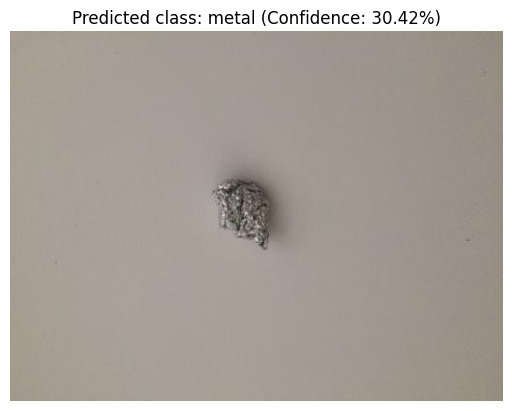 |
| Paper | 1,012 | 38 |  |  |
| Plastic | 794 | 71 | 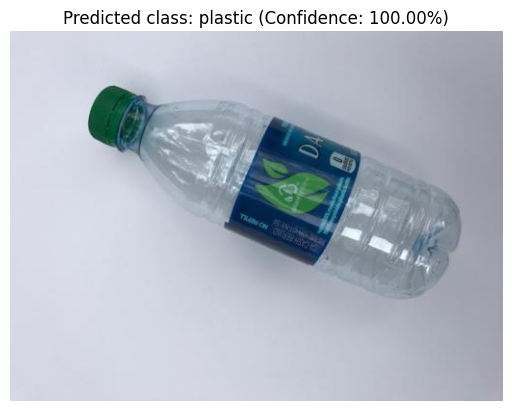 | 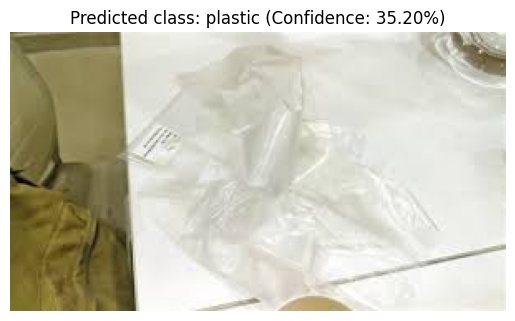 |
| Shoes | 1,968 | 9 |  |  |
| Trash | 690 | 7 | 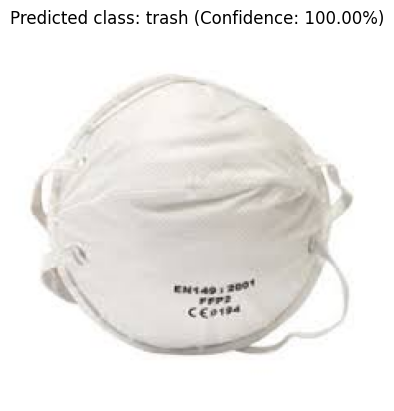 |  |
The model is limited to the classes it was trained on. It may not be able to accurately classify images of garbage that are not in those classes. Additionally, the model's accuracy may vary depending on the quality of the input images.
Future work could focus on improving the model's accuracy by training it on a larger and more diverse dataset. Additionally, the model could be adapted to classify other types of objects.